Ceramic or porcelain? They look similar on the shelf, but one key difference decides which belongs on your walls and which can handle your floors, your shower and even outdoors.
Quick answer
Porcelain is denser and less absorbent, with water absorption under 0.5 percent, so it suits floors, wet rooms and outdoors. Ceramic is lighter and easier to cut, which makes it ideal for walls. Choose by where the tile will go, not by which is better overall.
What are ceramic tiles?
Ceramic tiles are made from natural clay, shaped and fired in a kiln, then usually finished with a glaze that adds colour and pattern. They are lighter and easier to cut than porcelain, which makes them quick to fit and a popular, cost effective choice for walls. Ceramic absorbs a little more water than porcelain, so it is best kept to walls and to floors in lower traffic indoor rooms.
What are porcelain tiles?
Porcelain is a type of ceramic, but it is made from finer clay and fired at a higher temperature. This makes it denser, harder and almost non absorbent, with water absorption usually under 0.5 percent. That low absorption is why porcelain handles floors, wet rooms, frost and outdoor use so well. The colour often runs deeper through the body of the tile too, so small chips are less noticeable.
Ceramic vs porcelain at a glance
| Feature | Ceramic | Porcelain |
|---|---|---|
| Density | Less dense | Very dense |
| Water absorption | Higher | Under 0.5 percent |
| Best for | Walls and light use floors | Floors, wet rooms and outdoors |
| Cutting and fitting | Easier | Harder, needs the right tools |
| Durability | Good | Excellent |
Which should you choose?
Match the tile to the room rather than picking one as a blanket rule:
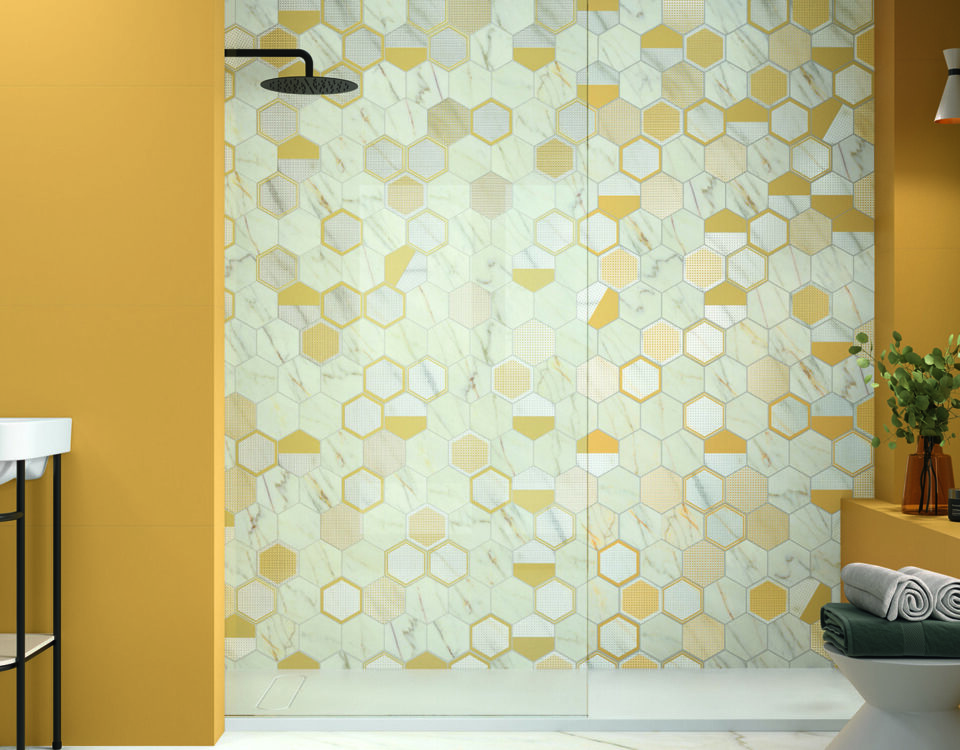
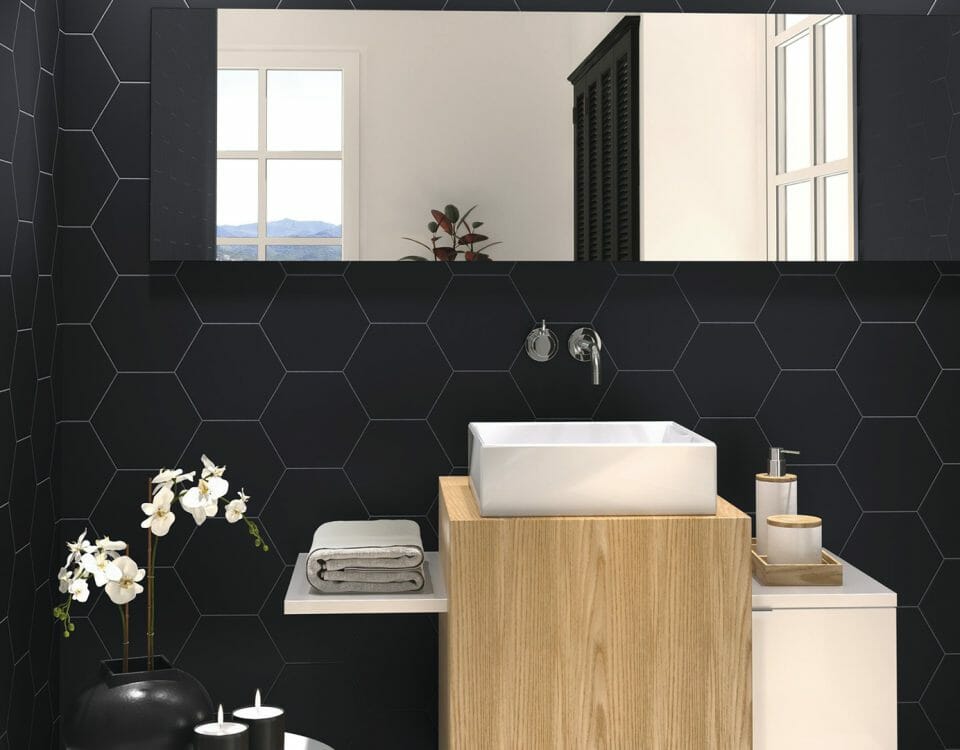
- Walls: ceramic is usually ideal, being lighter and easy to work with. Browse wall tiles.
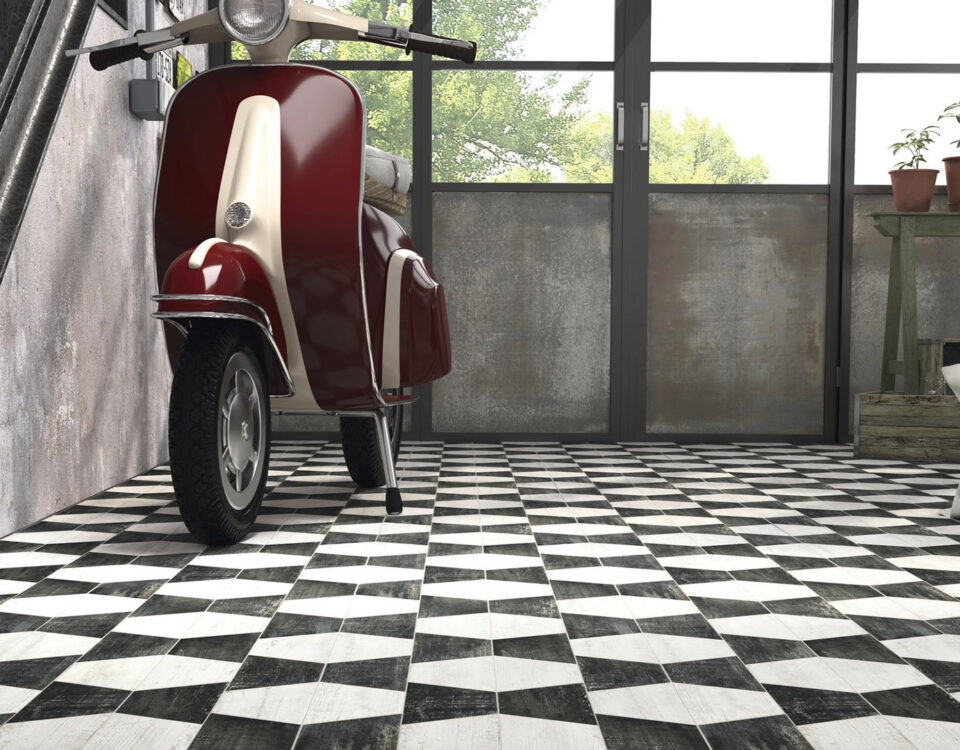
- Floors and high traffic areas: porcelain is the harder wearing choice. Browse floor tiles.
- Wet rooms and showers: porcelain, with a suitable slip rating for safety underfoot.
- Outdoors and frost prone areas: porcelain rated for outdoor use.
- Large format designs: porcelain, such as our large format tiles.
To make sense of the durability and slip figures on each product, read our guide to tile ratings explained.
Frequently asked questions
Is porcelain better than ceramic?
Neither is simply better. Porcelain is denser and less absorbent, which suits floors, wet areas and outdoors. Ceramic is lighter and easier to cut, which makes it a great choice for walls. The best tile depends on where you are using it.
Can ceramic tiles be used on floors?
Yes, ceramic can be used on domestic floors as long as it carries a suitable durability rating of PEI 3 or above. For busier areas, wet rooms or outdoors, porcelain is the safer choice.
Which is easier to fit, ceramic or porcelain?
Ceramic is generally easier to cut and fit because it is softer and lighter. Porcelain is harder, so it needs the right cutting tools, which is worth factoring in if you are tiling yourself.
Compare ceramic and porcelain in your own home before you buy.